Haemorrhoidal cavernous bodies are a normal part of human anatomy. They ensure the tight closure of the anal sphincter between defecations.
The bodies are located inside and outside of the anus. They are part of a network of blood vessels that form anastomoses (junctions) between the arterial and venous systems: the superior rectal artery with the superior, middle, and inferior rectal veins, surrounding the distal part of the rectum and the anal canal.
Approximately 2-3 cm above the anal opening is an anatomical landmark known as toothed or scallop line. It is distinguished by a ring of glands that secrete mucus, lubricating the anal canal. Normally, groups of submucosal vascular beds, consisting of supporting connective tissue, smooth muscles, blood vessels, and cavernous bodies, surround the anal canal.
Haemorrhoidal disease appears in men and women, when the cavernous bodies and other components of the anorectal vascular plexus pathologically expand. Their walls stretch, thin, become inflamed, are injured, and bleed. Depending on the location of the affected haemorrhoids relative to the dentate line, they are distinguished internal And external haemorrhoids.
The exact cause of the enlargement remains an open question for further research. The “strain” theory claims that under the influence of strain, the tissues supporting the vascular bundles break, which then shift, deform, and enlarge.
The problem of treating the disease is that patients seek help from doctors at late stages, when it is impossible to endure pain, and bleeding becomes frequent and heavy. This is facilitated by false shame, excessive modesty, and unjustified fear of painful diagnostic and therapeutic procedures. Haemorrhoids are a common disease that affects both men and women. Some studies have shown that men are slightly more prone to developing haemorrhoids—both internal and external. About 50% of people who have reached the age of 50 are affected by haemorrhoids. The disease is often found among young patients, and sometimes even in childhood.
Doctors do not see a difference between diseases that affect certain organs and systems. The specialist is always concerned with only one thing — curing the patient.
But medical professionals take into account the delicacy of the problem for the patient during consultation, examination, when conducting diagnostics, and when prescribing treatment.
Modern methods painless, precise, do not require hospitalization. Patients recover quickly after the procedures.
Causes of haemorrhoids in men
Содержание
At rest, the vascular tissue inside the anus fills with blood, tightly closing it. When the rectum fills with fecal matter, the cavernous bodies and arteriovenous anastomoses empty, which helps to control the process of defecation.
Haemorrhoidal disease usually develops when the supporting framework of muscle fibers and connective tissue in the anorectal apparatus, and in the vessel walls, weakens due to:
- age;
- stagnation of local blood circulation due to a sedentary lifestyle;
- voltage;
- increased intra-abdominal pressure.
There is pressure on the rectum and anus. The walls of the rectal vessels lose their elasticity. Their cavities expand.
In women, haemorrhoids usually develop during pregnancy – hormonal changes influence the growing uterus.
Men are more likely to develop haemorrhoids when they lift heavy objects or engage in strenuous or sedentary activities.
Haemorrhoids also develop in people who eat an unhealthy diet—highly processed foods. Unlike “live” food, they are low in fiber. As a result, there is a tendency to constipation. Straining during bowel movements creates more pressure and causes the blood vessels around the rectum to dilate.
- The main cause of haemorrhoids is problems with stool – constipation or diarrhea. If you often sit on the toilet for a long time, strain, strain the muscles of the abdomen and perineum to expel stool, the pressure on the elements of the choroid plexus in the rectum increases from the abdominal cavity. Under the influence of pressure, the haemorrhoidal cavernous bodies, like other vessels in the area, swell and stretch. The result is haemorrhoidal disease.
- Overweight and obese people often suffer from haemorrhoids.
- Haemorrhoids occur when the body ages – the walls of blood vessels and the muscular-ligamentous apparatus of the anorectal area weaken, stretch, and lose elasticity.
- Homosexuals suffer from haemorrhoidal disease, since anal intercourse expands the anus, makes its structures flabby, and injures the mucous membrane and blood vessels.
- Drivers, pilots, machinists, office workers, loaders, and construction workers also come to the clinic with haemorrhoids. People in these professions sit in one place for a long time or strain a lot when lifting heavy objects.
Thus, risk factors for haemorrhoidal disease are conditions associated with increased intra-abdominal pressure and venous stagnation: obesity, constipation, straining during bowel movements, prolonged sitting on the toilet, repeated use of the Valsalva maneuver and chronic cough.
Symptoms of haemorrhoids in men
Haemorrhoidal disease manifests itself in different ways, depending on the causes, duration of the course and the presence of complications. At first it occurs in a mild form and often goes unnoticed.
Haemorrhoid symptoms are almost the same for men and women, although some studies show that men are less able to tolerate pain and blood loss.
Signs also depend on the location of the nodes – outside or inside, relative to the anus.
External haemorrhoids in men
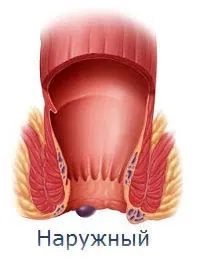 Usually present near the anus and is accompanied by pain. The problem is complicated by a thrombosed external haemorrhoid – this is a node in which a blood clot has formed. Such nodes are characterized by special symptoms and appearance: they look like a hard lump of blue or purple color.
Thrombosed external haemorrhoids can be single or multiple. According to severity, they are classified as IV degree haemorrhoids.
Symptoms of external haemorrhoids include:
- anal and skin itching;
- discomfort in the anus;
- hard, painful bulge or swelling from swelling near the anus;
- pain;
- bleeding
Itching and discomfort around the anal area are the most common initial symptoms that patients notice. The cause of concern increases when the nodes hurt, especially when sitting. The condition interferes with normal daily life.
Internal haemorrhoids in men
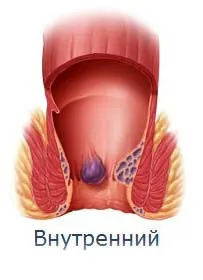 According to this system:
- The first degree corresponds to haemorrhoids that bleed but do not fall out.
- Second degree is defined when the haemorrhoid prolapses when straining, but spontaneously reduces or regresses.
- Third degree characterizes a condition in which the haemorrhoid falls out during straining or physical activity, but it is possible to manually push it back into the anal canal.
- The fourth degree is the most severe – haemorrhoids constantly fall out and cannot be set manually.
The classification does not take into account the symptoms of the disease.
Rectal bleeding, the most common symptom of haemorrhoids, usually bothers patients after bowel movements, and is characterized by the release of a small amount of bright red fresh blood. The coloration is a result of the direct arteriovenous communication present in the haemorrhoids.
In addition to bleeding, patients experience:
- rectal itching;
- a feeling of fullness in the anus due to swelling;
- a feeling of fullness in the rectum;
- fecal discharge outside the act of defecation, which contaminates the skin and underwear;
- pain that increases with prolapse of haemorrhoids.
Prolapsed haemorrhoids are often filled with thrombotic masses, injured, or compressed, leading to severe, even unbearable anal pain.
Methods of treating haemorrhoids in men
Haemorrhoid treatment should pursue three goals: eliminate mechanical and local provoking factors, reduce inflammation, always present in acute manifestations, and restore optimal hemodynamic and microcirculatory conditions.
- relieve symptoms;
- eliminate pathological conditions;
- eradicate the causes of haemorrhoidal disease in men.
Conservative treatment is an important part of haemorrhoidal disease therapy. External haemorrhoids do not require special treatment unless they are complicated by thrombosis or cause discomfort to the patient. Like mild internal haemorrhoids, they are effectively treated by modifying:
- diet;
- lifestyle;
- medications;
- non-invasive procedures — latex ring ligation and sclerotherapy.
Specialist recommendations include increasing the intake of dietary fiber, fresh berries and fruits, and water. For haemorrhoids, regular physical exercise, avoiding straining, and not reading on the toilet are beneficial. It is also better to avoid medications that cause constipation or diarrhea.
Phlebotonics
This is a family of plant-based and semi-synthetic compounds. They reduce permeability and improve the tone of the walls of venous vessels, facilitate lymphatic drainage, restore normal rheological properties of the blood, and the function of the microcirculatory bed.
Due to the aforementioned effects, drugs in this group eliminate bleeding, itching, and mucous discharge from the anus.
Troxevasin
It has antioxidant, venotonic, anti-edematous, and angioprotective effects.
Escuzan
Belongs to the derivatives of escin. The drug is made from horse chestnut seeds. It reduces the formation of exudate, relieves swelling, and increases venous tone.
Antistax
Is a dry extract of red grape leaves. It strengthens the venous vascular wall, improves its permeability, and eliminates edema.
Detralex
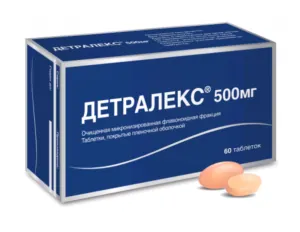 Tablets containing 1000 mg of diosmin. The drug meets all the requirements for the effective treatment of acute and chronic haemorrhoids.
Detralex reduces permeability and eliminates capillary wall fragility. Restores the ability of red blood cells to undergo physiological deformation, allowing them to freely pass through the narrow lumen of the capillary bed. Makes blood less viscous. Promotes the expansion of lymphatic vessels, improves lymphatic drainage.
The medicinal properties of Detralex are due to the action of the active substance of the drug – diosmin, which belongs to bioflavonoids. The only contraindication to use is individual intolerance.
Flavonoids – plant pigments found in apples, cranberries, blueberries, blackberries, etc. – increase vascular tone, reduce venous capacity, reduce capillary permeability, facilitate lymphatic drainage and can have anti-inflammatory and antioxidant effects. Laboratory evidence for individual compounds does not mean that phlebotonics or antioxidant supplements prevent or treat cancer; such claims are not supported by clinical evidence.
Their use causes a general improvement in haemorrhoid symptoms. Phlebotonics also relieve symptoms after haemorrhoidectomy.
Topical preparations: suppositories, ointments, creams, gels
Most haemorrhoid medications are medications containing various active ingredients that provide short-term symptom relief. These medications are applied directly to the anal or rectal area.
Anti-haemorrhoid products are produced in various forms, including creams, gels, ointments, and suppositories. Haemorrhoidal preparations contain protective lubricants; ingredients that narrow the lumen of blood vessels; hydrocortisone; painkillers and combination drugs.
Haemorrhoid medications often contain a protectant such as zinc oxide, mineral oil, or starch, which coats the sensitive tissue to prevent excessive drying and irritation. They form a protective barrier during the healing of haemorrhoidal tissue.
Protectors include:
- starch;
- zinc oxide;
- mineral oil;
- lanolin;
- glycerin.
These substances are included in combined topical antihaemorrhoidal drugs.
Hydrocortisone is a steroid that temporarily relieves the itching associated with haemorrhoids. Over-the-counter medications containing low doses of hydrocortisone also reduce inflammation.
Local anesthetics—xylocaine, lidocaine—numb the nerves and provide temporary relief from pain and other discomfort associated with haemorrhoids. They are included in gels and combined preparations in the form of suppositories, ointments, and creams for haemorrhoids.
Suppositories are used to treat internal haemorrhoids. They penetrate into the anus and into the final part of the rectum. Therefore, they will be useless for external haemorrhoids.
There are three main types of haemorrhoid suppositories:
- Vasoconstrictive agents.
They cause constriction of local blood vessels. This reduces inflammation and bleeding. They can interact with other medications and raise blood pressure. Therefore, it is worth consulting a doctor before using these haemorrhoid suppositories.
- Analgesics and anesthetics.
They reduce and relieve pain. They act locally on internal haemorrhoids, quickly and effectively alleviating pain from haemorrhoids.
- Laxatives.
They do not directly affect haemorrhoids, but help to fight constipation. Some of them influence the intestinal wall, stimulating muscular activity. Others act as lubricants. The use of laxatives can have adverse long-term effects on bowel function.
In addition, pharmacists offer a wide selection of combined suppositories containing herbal, anti-inflammatory ingredients,
Haemorrhoid ointments are used for the symptomatic treatment of external and internal nodes. In the first case, it’s enough to apply the ointment to the skin around the anus. When the nodes are located inside, the ointment is applied using a special applicator included in the pharmacy packaging. In terms of composition, ointments are similar to suppositories.
They can contain plant-based and other natural components, or synthesized medicinal substances. Combination products usually include anesthetics, glucocorticoids, protectors, and vasoconstrictive active ingredients.
Haemorrhoid creams are meant for external use. They are used to treat external haemorrhoids located under the skin. In addition to the usual ingredients found in topical haemorrhoid treatments, some creams contain heparin. It is needed to help dissolve clots, which often complicate the course of external haemorrhoid disease. The cream is applied to the skin around the anus.
Haemorrhoid gels contain a local anesthetic — lidocaine or xylocaine. Gels are used to treat pain with external and internal localization of haemorrhoids.
Before using haemorrhoid medications, it is important to consult a proctologist. Each drug has indications and side effects. A doctor, not a pharmacist, after examination and diagnosis, can properly assess the situation and choose a medication that will help the patient and not cause harm. You should not use haemorrhoid suppositories, ointments, and creams that were prescribed for someone else!
Oral medications
Tablets, dragees, and capsules with pain-relieving effects that also have anti-inflammatory action temporarily improve well-being in haemorrhoids.
These include:
- Paracetamol (acetaminophen) — a possible pain relief option if there are no contraindications; follow the instructions and doctor’s recommendations.
- Aspirin should not be started on your own for the treatment of haemorrhoids: it can increase the risk of bleeding. If the medication has already been prescribed for another condition, the decision to continue or discontinue it should be made with the attending physician.
- Ibuprofen may increase the risk of bleeding and has other contraindications. For bleeding haemorrhoids, do not use it yourself; Check with your doctor for pain relief options.
- Diclofenac and other NSAIDs require an assessment of contraindications, concomitant medications, and bleeding risk. Their use for haemorrhoids is agreed upon individually.
The drugs should not be taken for more than seven days. They have severe side effects and a number of contraindications. It is better to consult a doctor before use.
It is strictly recommended that patients do not try any medicines, suppositories, ointments, creams without proper diagnosis or consultation with a doctor for the treatment of haemorrhoids.
Traditional treatment at home
For haemorrhoids, sitz baths are good for getting rid of symptoms. It is enough to sit in warm water drawn into a basin or bathtub. The procedure for 20 minutes three times a day reduces pain, itching, burning. Potassium permanganate is added to the water, which eliminates pathogenic microflora. After baths, it is advisable to take topical medications and lie on your side.
Laxatives and enemas relieve constipation. Over-the-counter haemorrhoid ointments and petroleum jelly have a soothing effect on the mucous membrane and skin over the nodes.
Black cumin seeds
 Eating black cumin seeds helps maintain and improve the health of the gastrointestinal tract. It provides relief from problems such as gastritis, bloating, indigestion, peptic ulcers, flatulence, heartburn, abdominal pain. It also helps with intestinal function.
One tablespoon of black cumin powder is mixed with water to form a paste. Apply the paste to the anal area for 15-20 minutes, twice a day.
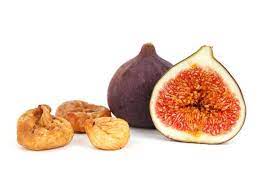 Fig
They use its laxative and anti-inflammatory properties.
Soak 3-4 figs in a glass of water in the evening for 6-8 hours, daily. Drink on an empty stomach.
Radish juice
Used for haemorrhoids due to its natural laxative properties.
Mix one tablespoon of grated radish with honey. Drinking fresh radish juice daily helps in getting rid of haemorrhoids.
Bitter gourd juice
Thanks to its natural laxative properties, it helps in the treatment of haemorrhoids. Take 30-40 ml of fresh bitter gourd juice daily in the morning, which helps in treating haemorrhoids.
Aloe vera
Helps in the treatment of all types of haemorrhoids due to its anti-inflammatory properties. Apply fresh aloe vera juice to the affected area to relieve external haemorrhoids. Drinking 20 ml of aloe vera juice made from fresh leaves daily helps ease haemorrhoids.
Turmeric for Thrombosed Haemorrhoids
Turmeric has anti-inflammatory and antibacterial properties. It helps in the treatment of haemorrhoids when applied locally. Turmeric reduces pain after surgical treatment of haemorrhoids if added to the diet.
Electric Heating Pad for Thrombosed Haemorrhoids
Thrombosed haemorrhoids are very painful. Traditionally, it is recommended to apply a warm heating pad to the thrombosed haemorrhoidal node for haemorrhoid pain. Heat improves blood flow, helps reduce haemorrhoids, and alleviates pain.
Effective and Rapid Treatment of Haemorrhoids in Men
Treatment options used for haemorrhoids include minimally invasive procedures:
- Latex ligation is used for certain forms of internal haemorrhoids, especially if conservative care is insufficient. A small ring pinches the base of the node above the dentate line; the treated tissue then detaches and a scar forms. The procedure may require several sessions, and pain, bleeding, and recurrence are possible. It is incorrect to promise more than 99% effectiveness to all patients without specifying the conditions of the study.
- Sclerotherapy. The method is aimed at achieving an effect similar to rubber band ligation. The medicinal solution is injected directly into the haemorrhoidal tissue, causing the vein walls to collapse. The haemorrhoidal node shrinks and falls off within 7-10 days.
- Laser coagulation therapy is used to treat haemorrhoids. The method uses infrared light for laser exposure to the node. The heat from the laser causes the formation of scar tissue, which destroys the haemorrhoid. Only one node can be treated at a time. The procedure is performed once every 10-14 days.
- Electrocoagulation is similar to coagulation therapy. An electric current is directed into the haemorrhoidal node, it blocks the blood flow, and the haemorrhoidal node falls off.
- Haemorrhoidectomy . If other methods are ineffective, the doctor may resort to surgical treatment. Haemorrhoidectomy involves the removal of a prolapsed haemorrhoidal node, especially if it is large or complicated.
- Stapled haemorrhoidopexy (Longo operation) involves excising a ring of mucosal and submucosal tissue above the dentate line with the formation of a stapled suture, which lifts the prolapsing internal tissues. This method does not remove external nodes. It is considered in selected patients after discussing alternatives: pain, bleeding, recurrent prolapse, and other complications are possible. The method is not recommended as the standard first surgical choice for all patients.
Treatment of external haemorrhoids in men
External haemorrhoids usually respond well to conservative therapy at home if the disease is diagnosed and treatment is prescribed by a doctor. But if complications arise accompanied by unbearable pain, active intervention by a proctologist is necessary.
Thrombectomy is a method of treating painful, thrombosed external haemorrhoids. They can be effectively removed within three days from the onset of the thrombus. A simple incision is made through which the blood is drained. This provides instant relief.
Excision of external haemorrhoids — haemorrhoidectomy. Haemorrhoids are removed using a surgical instrument, usually a scalpel. This is a standard procedure that easily prevents recurrence of haemorrhoids.
First, anesthesia of the anal area is performed with a local anesthetic. Haemorrhoidal nodes are excised. The wound is stitched with absorbable suture material that does not require removal. Patients are given instructions on how to care for the area.
Overall, people tolerate the procedure well. Most patients do not need painkillers on the fourth to fifth day after surgery and resume their usual activities from the first days.
Get Rid of Haemorrhoids in Three Simple Steps
- Call us or fill out the form below to receive a consultation (confirm the cost when making an appointment) with a doctor.
- Schedule a visit with a doctor to assess your condition, clarify the diagnosis, and discuss suitable treatment options. The cost of the consultation and included services can be confirmed when booking or on the pricing page.
- Plan a procedure that works for you, which will be performed by an experienced specialist from our clinic.
All interventions performed by our specialists are completely painless for patients. We use an epidural catheter for postoperative pain relief as part of spinal-epidural anesthesia with epidural block placement.
The material clarifies identified medical inaccuracies. Methods, contraindications, and recovery depend on the individual situation; the information helps you prepare for the consultation.
ASCRS: Recommendations on Haemorrhoids, 2024 · NIDDK: Haemorrhoidal Disease · NCI: Antioxidants and Cancer Prevention